
Sustainable Packaging
Beyond Greenwashing: Why Your Mailer Choice Matters
Your customers notice the details, and if your brand preaches environmental responsibility, zero waste, or conservation, shipping products in conventional plastic or deceptive oxo-degradable film; creates a glaring contradiction.
Sep 16, 2026
When customers purchase from your brand, the unboxing moment is an important physical touchpoint—a tangible handshake between your ethos and their doorstep. For many eco-conscious shoppers, however, that excitement is quickly followed by familiar guilt: peeling open a plastic poly mailer, tossing aside yards of bubble wrap, and wondering where it will all end up.
In response, direct-to-consumer (D2C) brands have rushed to find greener solutions. Unfortunately, the packaging market is saturated with clever marketing and misleading buzzwords. If you want your brand to stand for genuine sustainability, it’s time to look past the greenwashing and examine what your mailers actually leave behind in the soil.
The Trap of the "Pseudo-Eco" Mailer
Traditional petroleum-based plastics have long been the default because they are cheap, durable, and reliable. But they were designed to outlast us, lingering in landfills and oceans for centuries.
To counter this, many brands have turned to "bio-based" or "oxo-degradable" plastics. Here’s the catch: oxo-degradable plastics do not actually biodegrade. Instead, chemical additives cause the plastic to fragment into tiny, brittle pieces when exposed to heat and light.
These fragments don’t disappear—they break down into microplastics that infiltrate soil and water systems, where they can persist for decades. If your "eco-friendly" mailer leaves behind invisible chemical dust, it isn’t solving the plastic crisis; it’s simply hiding it.
What Real Circularity Looks Like
True sustainability doesn’t rely on loopholes or partial degradation. It follows a closed-loop philosophy: If it can’t become soil, it shouldn’t be a bag.
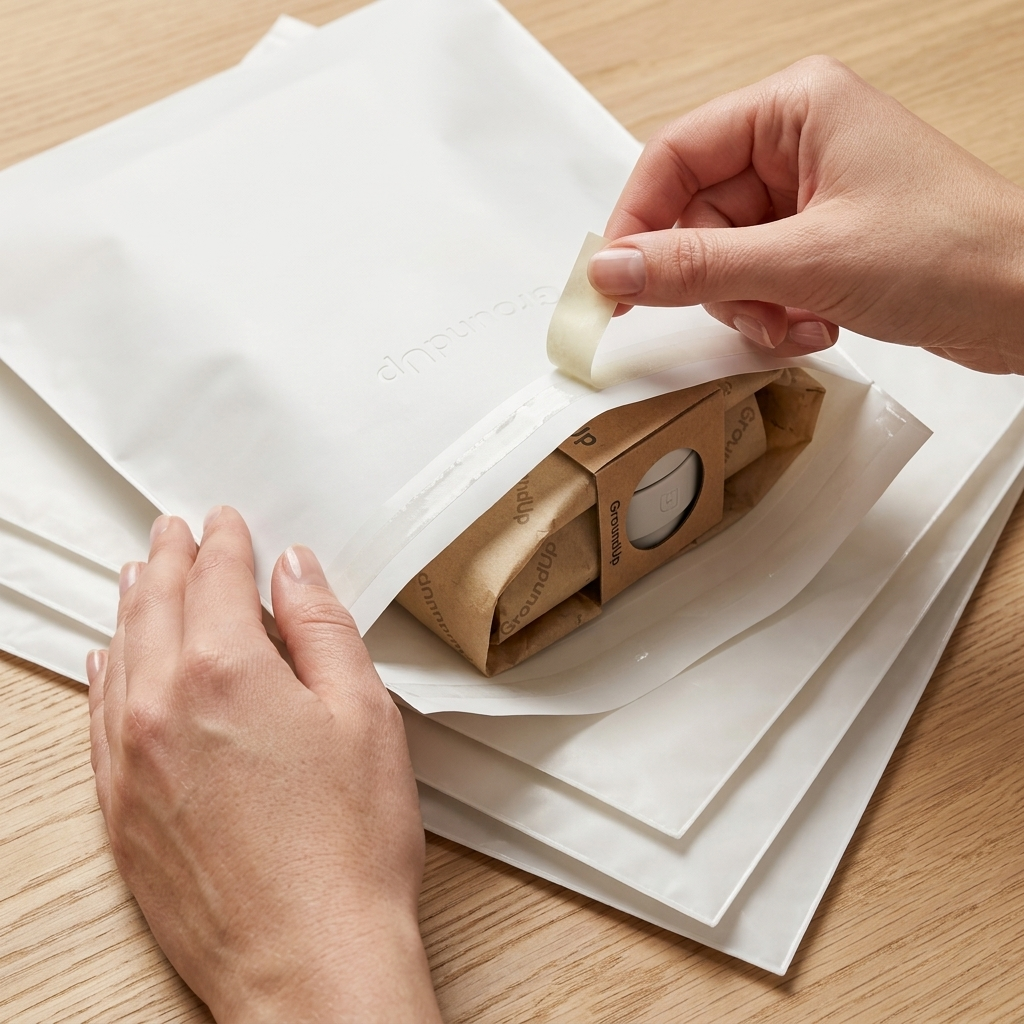
Forward-thinking e-commerce brands are turning to materials that mimic nature’s life cycle. GroundUp e-commerce mailers, for example, are made entirely from plant starches and plant-based polymers (like PBAT).
When evaluating home-compostable mailers for your supply chain, look for rigorous, third-party validation rather than vague corporate claims. Genuine plant-based mailers offer several advantages:
- Certified Home & Municipal Compostability: Look for independent certifications such as TÜV Austria OK Compost HOME or BPI (ASTM D6400), which confirm that the material breaks down completely in active compost environments without leaving toxic residue.
- Zero Microplastics: A truly circular mailer returns completely to water, carbon dioxide, and organic biomass, leaving no microplastics behind.
- Drastically Lower Emissions: Plant-based polymer manufacturing can produce up to a 12x lower carbon footprint than standard virgin plastics.
Performance Without Compromise
The main hesitation brands have about switching to plant-based mailers is durability. Will they tear in transit? Will they hold up against rain or rough handling by carriers?
The reality is that material science has advanced far beyond the fragile bioplastics of the past. High-performance plant-based polymer blends are engineered for heavy-duty strength, puncture resistance, and reliable adhesive seals. They protect your products through the rigors of real-world transit just as effectively as traditional plastic, while remaining stable on warehouse shelves for more than a year. They only begin to break down when exposed to the specific heat, moisture, and microbes found in an active composting environment.
Aligning Your Packaging with Your Mission
Your customers notice the details. If your brand preaches environmental responsibility, zero waste, or conservation, shipping products in conventional plastic—or deceptive oxo-degradable film—creates a glaring contradiction.
Upgrading your e-commerce mailers is one of the most powerful, visible statements you can make. It protects your merchandise, respects the planet, and closes the loop on your supply chain footprint.
Ready to see for yourself?
Move beyond greenwashed packaging and experience real performance. Visit groundupbags.com to request a sample kit and discover how soft-touch, heavy-duty plant-based mailers can elevate your brand's unboxing experience.